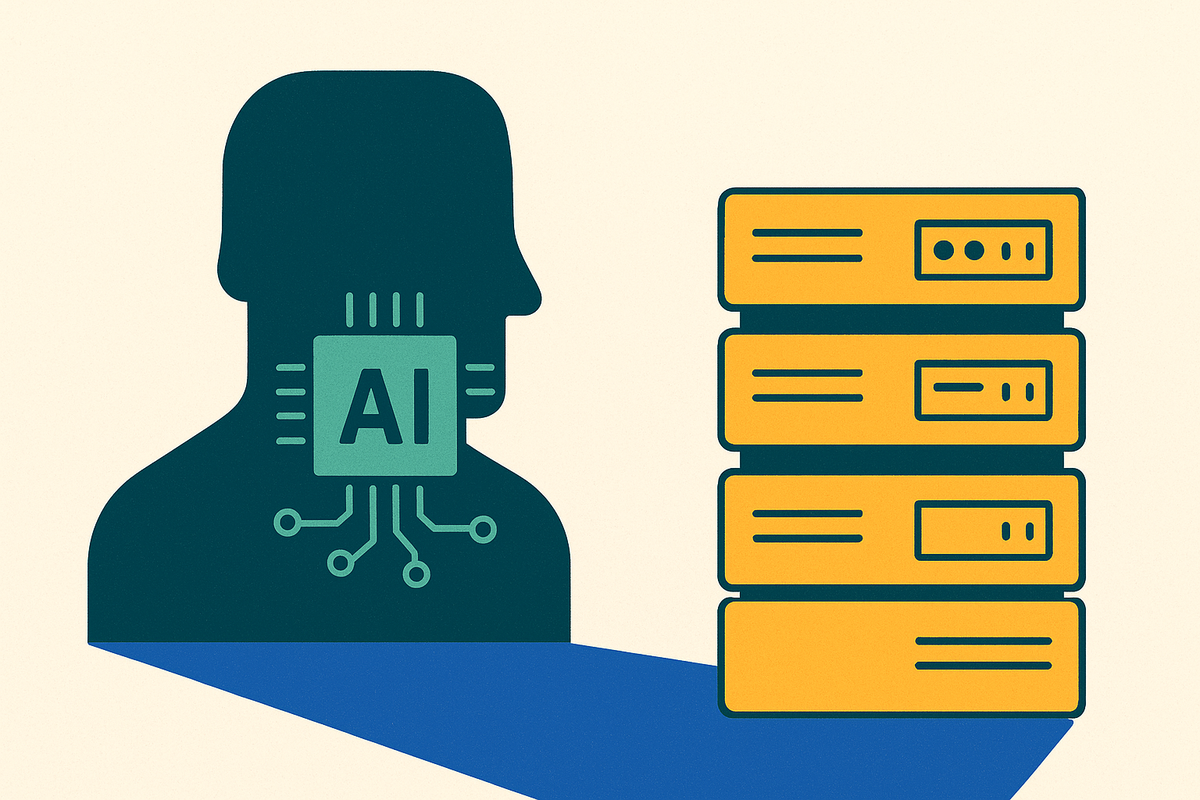
Sanctioned MCP Server Access as the Productivity-Safe Answer to Shadow AI
Governed MCP access eliminates the speed advantage that drives shadow AI adoption.
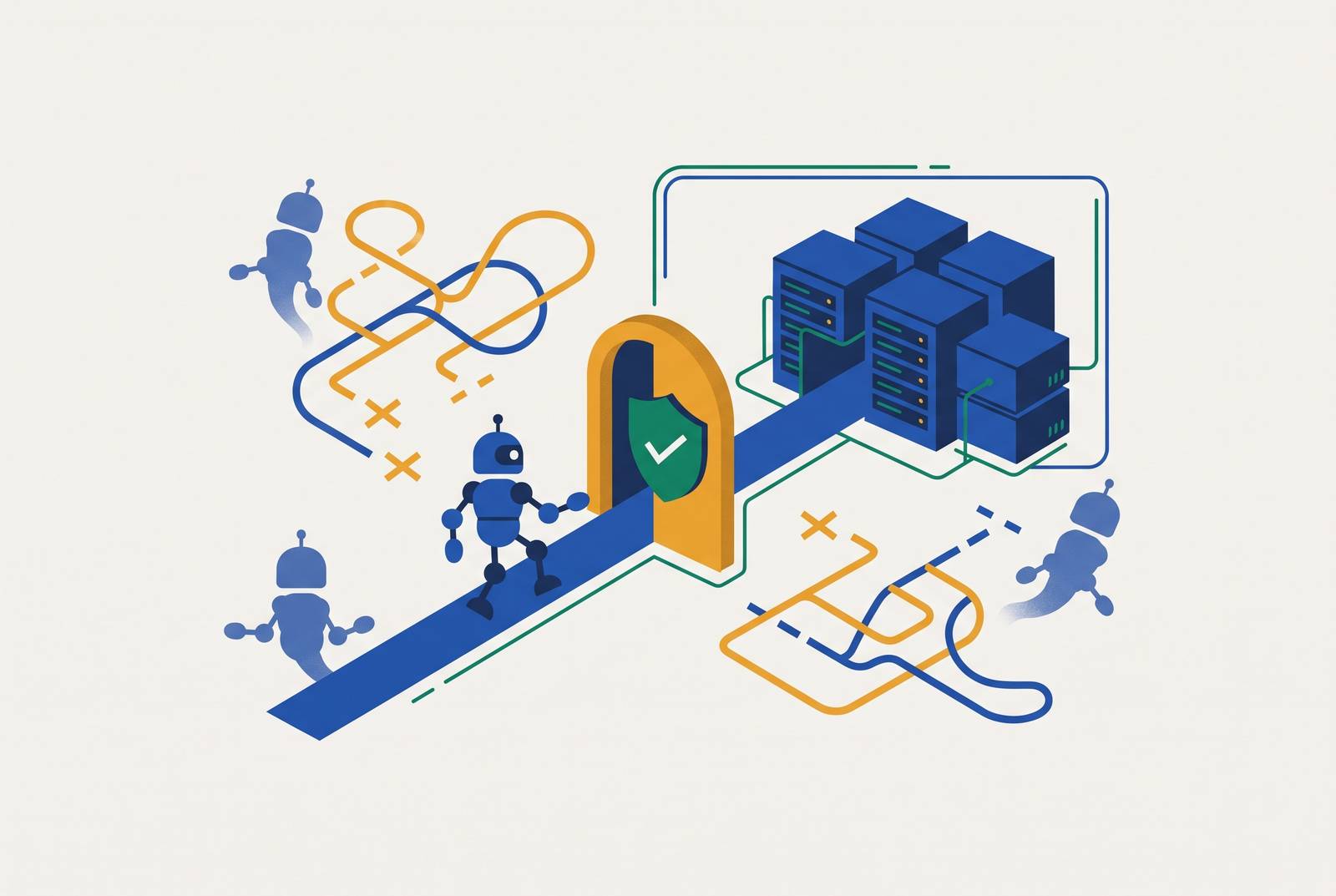
Shadow AI exists because the approved path is slower than the unapproved one, not because employees are careless or defiant. Governed MCP server access fixes the actual problem: it makes the sanctioned route fast enough that developers stop reaching around it. That's the argument this piece makes, and the rest of it builds the case point by point.
Why employees reach for unsanctioned AI tools
Shadow AI is the default condition of enterprise AI adoption now. Optro's AI oversight gap research found that 80% of organizations report moderate to pervasive unsanctioned AI use, but only a quarter can see how employees use AI day to day. That gap between how much unsanctioned use is happening and how much of it anyone can see is the whole problem in miniature.
Three structural forces keep that gap open. Consumer AI products were built to ingest data and learn from it, not to support enterprise retention controls or audit trails, so plugging them into daily work creates exposure by design. AI features also appear silently inside tools that already passed procurement: an embedded summarizer, a smart autocomplete quietly calling an external model, none of it ever generating a ticket for security to review. And employees are solving a real problem. When a task that took two hours can be done in minutes with a tool nobody approved, most people will use it because the sanctioned option is slower or doesn't exist, not because they're ignoring policy.
That third driver carries real weight behind it. Employees report feeling that keeping pace with AI adoption is tied to their career security, so the decision to reach for an unapproved tool is often made under genuine time pressure, not as a calculated workaround. Banning the tools doesn't resolve that pressure. Research consistently shows that close to half of employees would keep using personal AI accounts even after a company bans them. Prohibition doesn't eliminate the behavior. It pushes it underground, where nobody can see it, which is a worse position than the one the ban was supposed to fix.
MCP and the risk calculus for ungoverned AI use
Shadow AI running through MCP agents is a different category of risk than employees pasting data into a single AI chatbot, because an unauthorized agent can act across systems in ways no perimeter control was ever built to catch. A chatbot exposes whatever a person typed into it. An MCP agent can query databases, call APIs, send emails, and move credentials, often without a human reviewing any of it in real time.
The scale of this is already large. Akamai's Enterprise AI Usage Risk Report found that nearly half of enterprise AI conversations happen through personal identities instead of corporate-managed accounts, which puts a huge share of AI activity, agents included, outside the reach of standard identity governance. Developers are already connecting Claude, Cursor, and internal agents to MCP servers that read files, call APIs, and move data between systems. That's a new way for data to leave the building, one most security stacks can't see, and none of it requires a procurement ticket to exist.
The identity gap is sharpest at this agentic layer. Every MCP server running without governance is an identity the organization has no record of, and an identity nobody's tracking is the one most likely to get exploited.
The compliance exposure of ungoverned MCP
An incomplete inventory of AI systems used to be a governance headache for IT. In 2026, it's a potential legal violation carrying real penalties. The EU AI Act's enforcement of high-risk AI system obligations under Annex III begins December 2, 2027, after a Digital Omnibus regulation pushed back the original August 2, 2026 deadline. Organizations without a full inventory of the AI systems running in their environment, MCP-connected agents included, face consequences well beyond a bad headline.
GDPR requires "appropriate technical measures" for personal data processed through MCP. A team can't skip tool invocation logging and access controls just because it's convenient. They're compliance artifacts regulators expect to see.
CB Financial Services filed an SEC Form 8-K in May 2026, and unauthorized employee AI use triggered it. The data involved, not any operational disruption, was enough to trigger a materiality disclosure obligation. If an organization still treats MCP governance as a future initiative, it's operating inside a compliance gap that regulators are actively closing, not one it can safely defer.
The sanctioned MCP access model in practice
Governed MCP access is the organization deciding, on purpose, what AI is permitted to do, backed by a record that proves the decision was made.
Several protocol advances from 2026 make that decision enforceable in a way it wasn't before. The Enterprise-Managed Authorization extension was promoted to stable, giving organizations a centralized way to control MCP server access through their existing identity provider, handling OAuth, RBAC, and audit logging in a standardized form that unblocked most enterprise deployments. The 2026-07-28 specification removed the stateful initialize handshake and session ID entirely, so every MCP tool call now arrives as a self-contained HTTP request carrying its own identity and capability information (some calls need multiple round-trips through the new Multi Round-Trip Requests mechanism, but the control point is clean and gateable in a way the old protocol never offered). MCP also became a multi-company open standard under the Linux Foundation, with AWS, Cloudflare, and Google publishing production commitments, which removes the single-vendor lock-in concern that slowed earlier adoption.
The governance model practitioners are actually running looks straightforward: a centrally maintained allowlist with a self-service addition process. Developers propose new servers, a lightweight security review runs, IT keeps inventory visibility and credential oversight, and the whole cycle takes days, not weeks. GitHub Copilot's internal MCP registry shows this working at scale. Admins upload a registry URL, select the "Registry only" policy, and developers can only use servers listed there. Anything else gets blocked at runtime with a clear policy message.
The registry itself isn't paperwork for its own sake. Every MCP server missing from it is an identity the organization can't account for, and the registry is the inventory that makes every other part of the governance stack actually function.
MCP Manager's governed path for developers
The structural tension driving shadow AI is speed versus control, not defiance. A governance model only reduces shadow AI if the sanctioned path is fast enough that developers choose it over building a workaround. MCP Manager's centralized governance layer is built to collapse that trade-off: it makes the approved path faster and more capable than the unsanctioned one, so speed and safety stop competing and start working as a single outcome.
MCP Manager supplies the control layer, the gateway, guardrails, and observability, that turns the protocol's new authorization primitives into an access model organizations can actually run day to day. Every MCP server an organization permits gets a named, inventoried registry entry, so there are no ungoverned servers and no identities left unaccounted for. Access decisions get made through RBAC built for AI agents specifically: agents receive the permissions an organization deliberately granted, not whatever permissions the model happens to be capable of reaching.
Every ungoverned MCP server is an identity outside the organization's access controls, so it's a vulnerability most perimeter security was never built to catch. Real-time visibility into what an agent actually touches across systems and APIs means knowing an attack surface instead of finding out about it after something's already gone wrong. MCP Manager's audit logging is built for that earlier window, surfacing activity while it's still actionable rather than compiling it into a report after an incident has already happened.
MCP Manager was acquired by Usercentrics and built on the same data governance expertise that enterprises already rely on for consent and privacy infrastructure, so its access controls are built for regulated environments from the start. The self-service review cycle that a workable governance program needs, days rather than weeks, only holds up if the underlying tooling makes lightweight review genuinely fast, and that's the cycle MCP Manager is built to support, preserving developer speed without giving up oversight. If organizations centralize and enforce MCP access policy before deployment, they ship agentic AI faster than teams planning to secure it later, because the guardrails are what let a security team say yes to production.
Sanctioned MCP access versus detection and blocking
The most effective response to shadow AI is making the approved path better than the unsanctioned one. But making the unsanctioned path harder to reach doesn't address why employees went looking for it.
When organizations provision sanctioned AI tools, unauthorized use drops sharply. The supply-side fix outperforms detection and blocking because it addresses the actual root cause: the sanctioned option either didn't exist or wasn't good enough to compete. Blocking MCP servers to feel safer just pushes the activity underground. If you hand employees a governed path to the tools they already want, you cut shadow AI far more than if you ban those same tools.
Agent-enabled applications are projected to expand sharply across the enterprise by the end of 2026, and the surface area for agentic shadow AI is growing faster than any detection program can realistically cover. Only a quarter of organizations can see how employees use AI, so most of the detection programs running today don't catch the bulk of the shadow AI activity they think they're governing.
A detection program with no sanctioned alternative behind it is telling employees the answer to their productivity problem is no, and the data on ban effectiveness shows that answer doesn't hold. The federated governance model, an allowlist with self-service addition, a 48-to-72-hour review window, a centrally maintained registry, moves fast enough to compete with the unsanctioned alternative on the one dimension that actually drives shadow AI adoption: speed.
The legitimate objection: sanctioning a server does not neutralize its attack surface
Sanctioning an MCP server doesn't make it secure on its own, and that distinction deserves to be taken seriously.
The objection holds up under scrutiny. The destination is still the same MCP server. The tool being invoked is one the agent is authorized to use. Whether an operation is legitimate or a successful attack depends entirely on the semantic content of the data being processed, a layer no allowlist, WAF rule, or DLP policy is built to inspect. The NSA's security guidance from May 2026 names the same structural gap directly: MCP currently lacks native support for exchanging Role-Based Access Control permissions at instantiation, which makes it hard to enforce or verify access boundaries between tasks or services.
The practitioner response to that gap is layered defense: approved-server allowlists, container isolation, least-privilege OAuth, runtime observability, and human-in-the-loop approval for high-risk actions. Each layer reduces blast radius on its own, and stacked together in production, they hold up as a posture that can defend even against an objection this specific.
The objection conflates two different risk surfaces that need to be kept separate. It describes the security posture of ungoverned MCP and applies it wholesale to governed MCP, but the entire argument rests on treating those as the same thing when they aren't. A server with no audit trail, no identity binding, and no allowlist enforcement carries a fundamentally different risk than one running under all three. An attack surface discovered after deployment is a governance failure, not a security surprise: the vulnerability existed from the moment the server went ungoverned. Sanctioning it with real controls makes that surface visible and manageable.
Moving from ungoverned MCP adoption to a sanctioned access program
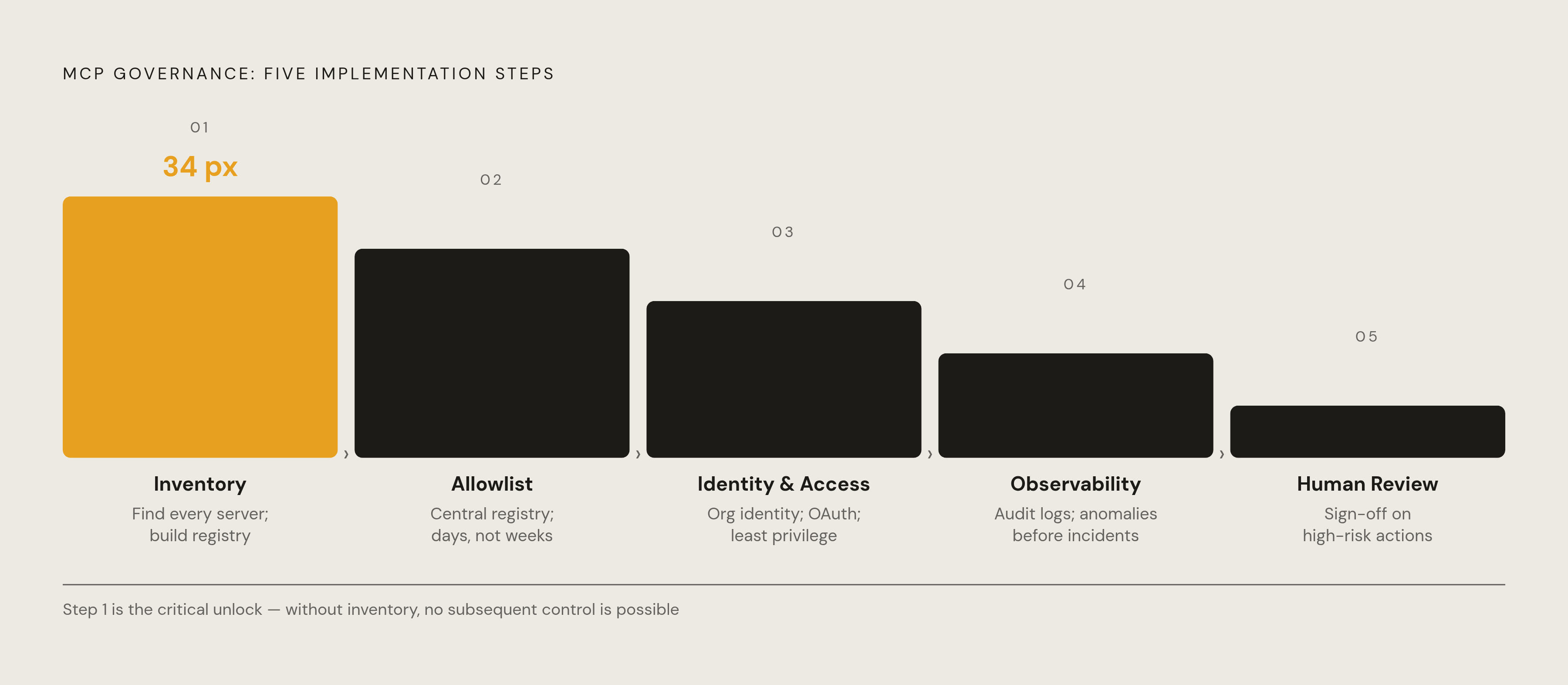
The organizations winning on both speed and safety in the agentic era treat MCP governance as the infrastructure that makes production possible, not a checkpoint standing in front of it.
The first step is inventory, and it has to come first: an organization can't govern servers it hasn't found, so every MCP server currently in use, including the ones developers wired up without ever filing a procurement ticket, needs a registry entry before anything else can matter. The second step is to build the allowlist and self-service process: a centrally maintained registry paired with a lightweight approval path measured in days rather than weeks, so developers get a sanctioned route fast enough to actually compete with the workaround. The third step is identity and access: every agent gets bound to an organizational identity, OAuth tokens get scoped to least privilege, and RBAC gets enforced so that what an AI agent can do is a decision the organization made on purpose, not a default it inherited by accident. The fourth step is real-time observability, because audit logging only works as a safety net if it's available before an incident happens; a log read after a breach is a postmortem, not a control, and the observability layer needs to surface anomalies while there's still time to act on them. The fifth step is human-in-the-loop review for high-risk actions. Not every agent action needs a person to sign off, but the ones that move credentials, modify records, or reach external systems do, and drawing that line explicitly is what makes the governed path trustworthy enough to run in production.
MCP Manager operationalizes that whole program as a single control layer, gateway enforcement, registry, RBAC, and real-time audit together, so the pieces don't have to be stitched together from separate tools that were never designed to work with each other. Fast MCP adoption and safe MCP adoption turn out to be the same problem solved the same way. The friction teams blame on security is almost always the absence of a gateway, and a working gateway lets an organization say yes to production deployments with confidence. The governed path wins because it's governed, not despite it.