Real-World Agentic AI Use Cases Across Industries
Enterprises are deploying agentic AI far faster than they're securing what those systems can access.
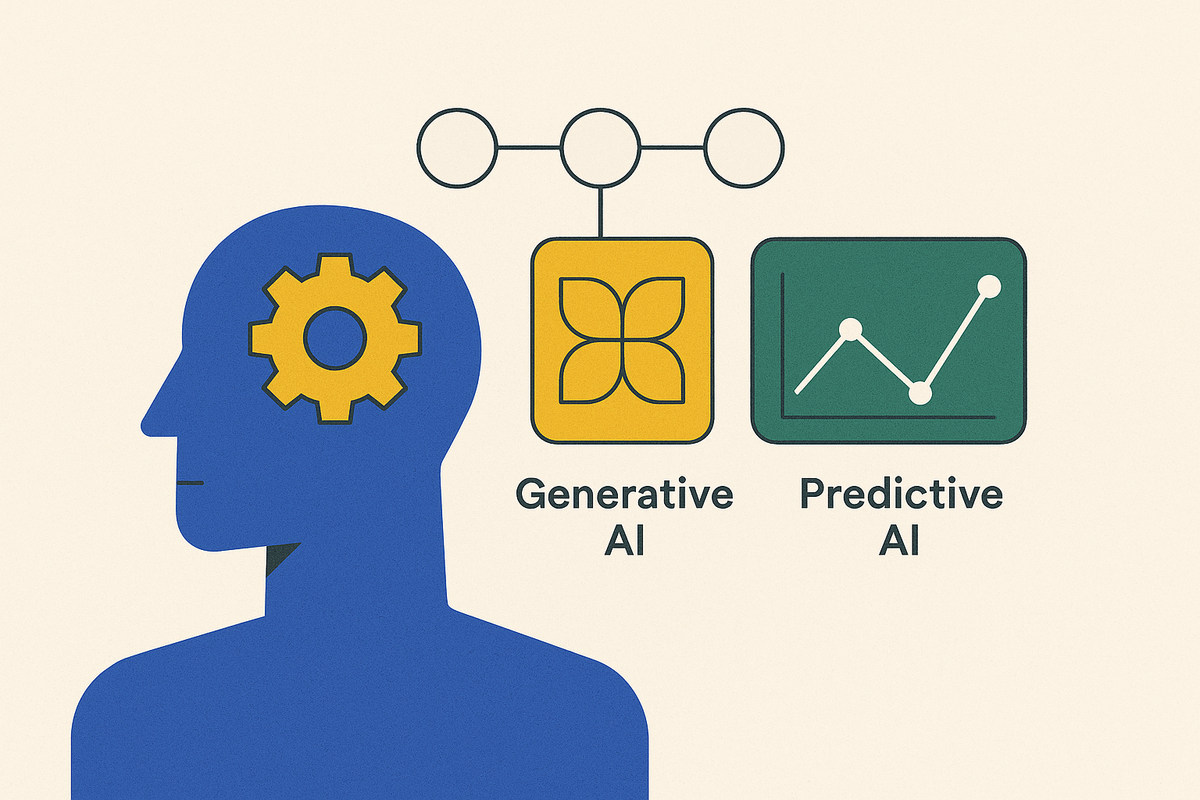
Agentic AI doesn't wait for a prompt. It plans, chains decisions together, and finishes multi-step jobs on its own, which puts it in a different category than the generative tools most people used over the past couple years. Generative AI answers what you ask it, nothing more; agentic AI figures out what needs to happen next, does it, checks the result, and keeps going until the job's actually done.
MIT Sloan professor Kate Kellogg and her co-researchers laid this out in a 2025 paper: agents extend large language models by letting them automate whole procedures beyond just fielding questions. An agent takes in an observation, reasons about it, and acts, then repeats that loop until the goal is met, with no standing around waiting for the next instruction.
Picture a factory floor. A sensor flags a vibration pattern that doesn't look right, and the agent queries the ERP system to check parts availability, schedules a technician, and generates a work order, all before anyone on the floor even looks up from what they're doing. Four systems touched, zero human clicks. That sequence, in one form or another, is the story of every industry below, and it's also where most of these deployments will eventually break something if nobody's watching the access.
How fast enterprises are actually moving on deployment
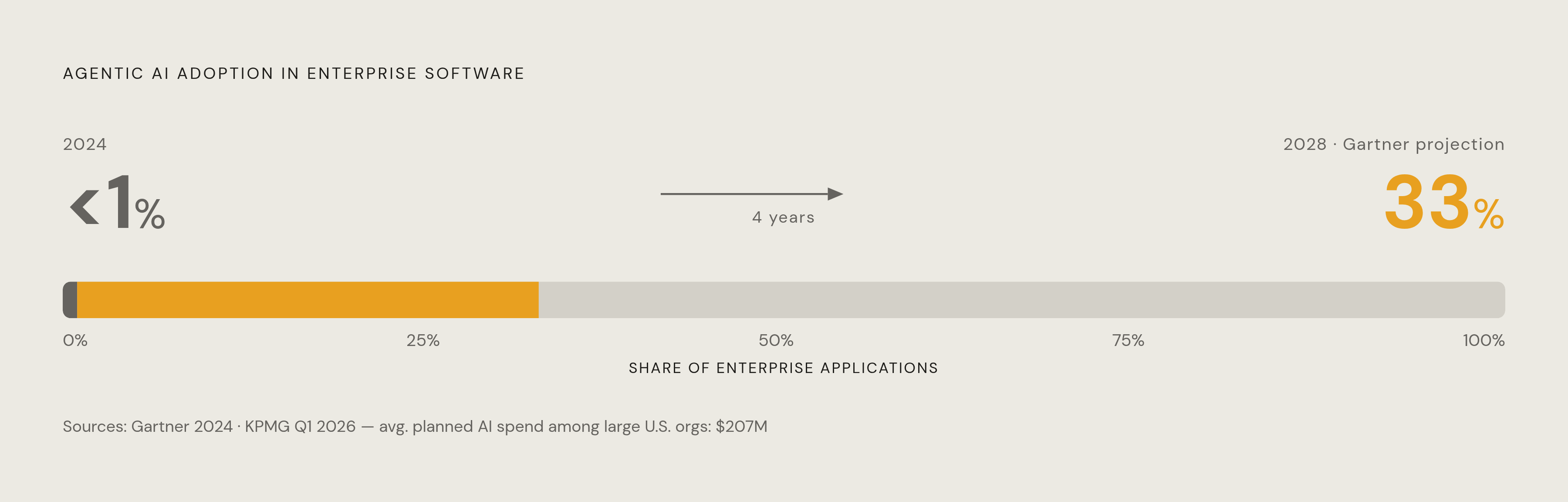
Gartner projects agentic AI will show up in 33% of enterprise software applications by 2028, up from less than 1% in 2024. KPMG's Q1 2026 AI Quarterly Pulse Survey put average planned AI investment among large U.S. organizations at $207 million. That's real budget going into production systems, budget a company can't quietly shelve when a board member asks hard questions.
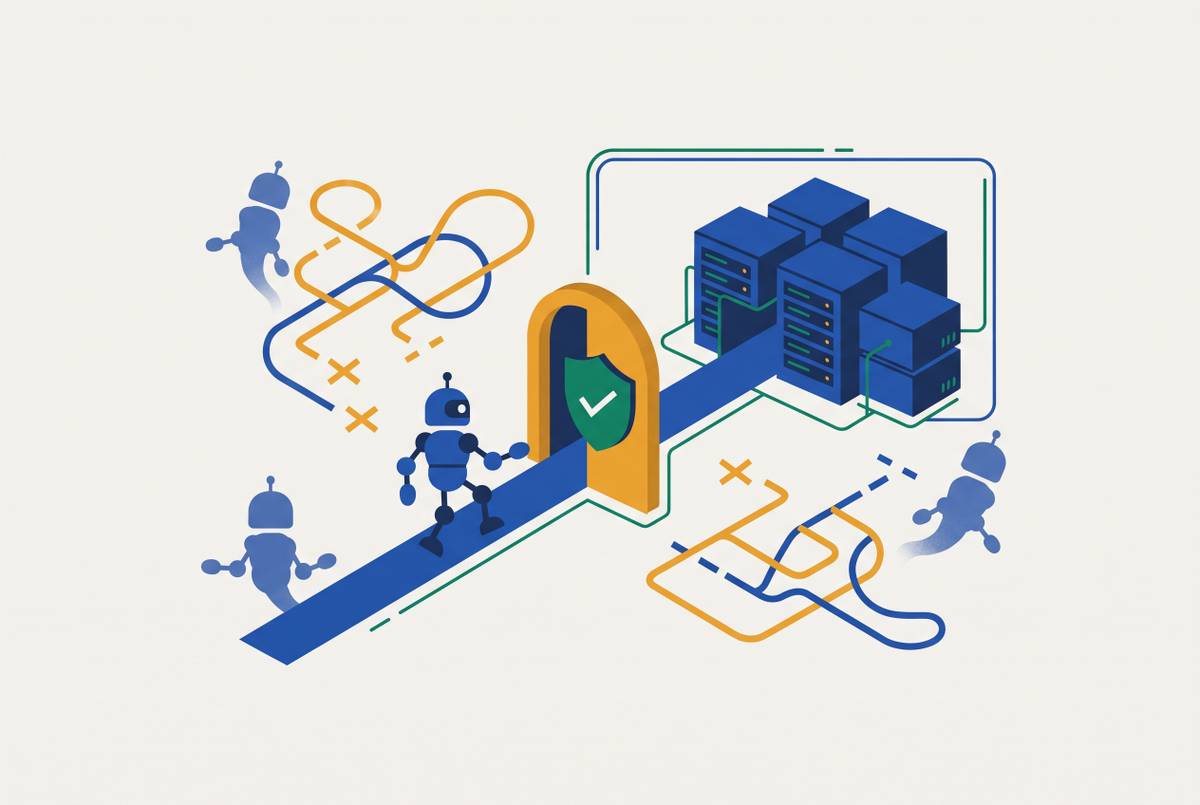
Here's the part most coverage skips: the deployment numbers matter less than what they're hiding. Companies are rolling agents into production faster than they're deciding what those agents should and shouldn't be allowed to touch. That gap, not the adoption curve, is the real story. An agent that can read a database can usually also write to it, and plenty of teams haven't sat down to separate those two permissions before go-live. Tools like MCPManager, a Usercentrics product for auditing and controlling how AI systems access business data via MCP, exist precisely because that gap is real and measurable.
Healthcare: where agentic AI handles documentation, triage, and prior authorization
In healthcare, agents are doing the paperwork nobody wants to do by hand: clinical documentation, patient triage, prior authorization requests, claims appeals, and coordinating care across systems that don't talk to each other well on their own.
Here's how the clinical decision-support loop typically runs. An agent pulls a patient's electronic health record in real time, cross-references clinical guidelines and drug databases against population-level evidence, and surfaces things like drug interaction warnings or differential diagnoses tailored to that specific patient, not generic guidance pulled from a textbook.
VoiceCare AI launched a pilot with Mayo Clinic in February 2025 to automate back-office operations using agentic systems. NVIDIA also partnered with IQVIA, Illumina, Mayo Clinic, and the Arc Institute to push agentic and generative AI into drug discovery and genomic research.
Prior authorization is the case worth sitting with, because it shows exactly why chaining matters and exactly where it goes wrong. The task means pulling records, checking payer rules, drafting an appeal, and submitting it, all under time pressure, with real cost to getting it wrong. Autonomous execution beats a human sitting in the loop on speed here, full stop. Yet that speed only holds if the agent's access is scoped tightly: what it can read, when it can act without asking, what always needs a human sign-off. Skip that step and the automation itself becomes the mistake.
Finance: fraud detection, portfolio management, and compliance at millisecond speed
Finance runs on speed, and agentic AI fits that rhythm. Agents flag and halt suspicious transactions in milliseconds, manage trading portfolios against risk policies set in advance, automate invoice reconciliation and expense audits, run KYC verification, and track compliance metrics continuously instead of in periodic batches.
Bank of America is the clearest large-scale example. Erica, its AI assistant, is used by over 90% of employees at the bank, and Bank of America is putting $4 billion into AI and technology in 2025, with agents writing code and automating internal processes at real scale. reMarkable deployed a Salesforce Agentforce agent that's handled over 18,000 service conversations, with satisfaction scores improving over time, which puts the technology in front of the customer directly rather than just in the back office.
The millisecond fraud case is where the stakes get obvious fast. An agent halting a transaction on its own needs precise access controls, because it's acting on real money, in real accounts, under rules the organization set on purpose and not by accident.
Here's where finance actually diverges from healthcare, and it's worth being blunt about it: get healthcare governance wrong and you risk a missed diagnosis; get finance governance wrong and you risk an unauthorized trade going out the door before anyone notices. Same root problem, access control, but the failure shows up on a different timeline. Healthcare mistakes surface in a patient chart, while finance mistakes surface on a trading floor, in milliseconds, with the money already gone.
Manufacturing: predictive maintenance, quality control, and the fully autonomous work order
The manufacturing sequence from the opening is the cleanest example of chaining in this entire piece. An agent detects an anomaly, queries the ERP for parts availability, schedules a technician, and generates a work order. Four systems, zero human touchpoints, one problem solved before a person would've finished reading the alert.
Precision manufacturing pushes this further still, with agents identifying defects, classifying quality issues, and triggering batch rejection the moment tolerances are exceeded, moving faster than a human inspector ever could.
Early adopters are running AI across the production floor to monitor operations, catch issues, analyze root causes, and support real-time decisions as part of daily plant operations, not as a demo for visitors. Deloitte's 2026 Manufacturing Industry Outlook found 80% of manufacturing executives plan to invest in agentic AI by year's end, which makes the remaining 20% the outliers now, not the cautious majority.
What sets manufacturing apart from healthcare and finance: the agent isn't reading and writing records anymore, it's triggering physical, operational decisions. Because ERP, CMMS, and shop-floor systems are wired together so tightly, a bad decision on a factory floor doesn't stay contained the way a bad database query might elsewhere. It becomes a stopped line or a scrapped batch, and there's no undo button on either one.
Supply chain and logistics: real-time disruption response and demand-signal-to-shelf
Gartner projects 60% of supply chain disruptions will get resolved without human intervention by 2031. That's the response loop, the part where a person used to decide what to do about a shortage or a delay, getting pulled out of human hands within the decade.
Leading retailers are already deploying multi-agent systems that compress what used to be slow, sequential processes stretching over weeks into continuous loops running in the background, no meeting required to move them forward.
Major logistics operators are deploying agents to manage inventory, optimize shelf space, and automate order picking across fulfillment centers. Warehouse orchestration agents are already being deployed to detect and resolve picking and packing issues in real time, ahead of a manager ever noticing something's off.
Pharma supply chains show how far this stretches into regulated territory. One AI agent platform covers over 1,800 rare excipients and more than 7,500 SKUs, automating RFQs, supplier discovery, and procurement decision support in a space where a sourcing mistake carries regulatory consequences, not just cost ones.
Supply chain is where the governance question gets genuinely harder than anywhere else in this piece. When an agent reaches into a supplier's system or a logistics partner's API, the access boundary isn't inside one company's walls anymore. It has to be negotiated across two organizations that don't share a security team, and most companies haven't actually sat down and done that work yet.
Customer service: from ticket deflection to full resolution without a human in the loop
Customer service agents have moved well past chatbots that answer FAQs and route tickets. The systems running now reason through multi-step requests, log into backend databases, process refunds, and resolve the issue completely, closing the ticket instead of just deflecting it to a queue.
That means grounding answers in an approved knowledge base, taking safe actions like refunds or password resets, routing genuinely complex cases to a human with full context already attached, then summarizing the transcript and tagging how it was resolved. All of that happens inside one conversation, without a person touching most of it.
Industry analysts expect agentic AI to resolve a large share of common customer service issues without human involvement within the decade. Salesforce says Einstein 1 Sales already saves sellers 3.5 hours a day, with sales operations teams closing chats 80% faster.
What makes customer service different from everything above it is visibility. The agent's output is a conversation, and the customer watches it happen in real time, which makes brand risk and policy compliance far more immediate than they are in a back-office job nobody outside the company ever sees. An agent that can issue a refund needs access scoped to exactly that: refunds, not blanket access to everything sitting in the CRM.
Software development and retail: two domains where agentic AI is reshaping the work itself
GitHub's Copilot agent is changing how software gets assigned, not just how it gets written, by operating inside the same toolchain engineers already use and producing output that goes through review like any other contributor's work would.
Retail shows the same shift as agents move from answering questions about a merchant's back office to actually working inside it, handling administrative tasks on their own.
Both cases share the same underlying shift, and it's the one worth remembering: the agent operates inside the tools and data the human worker already uses, not as a parallel system bolted onto the side. That makes what it can touch and what it can't a live operational decision a team configures and checks, not a debate for a whitepaper nobody reads twice.
The pattern that runs through every sector: chained access to real systems carrying real data
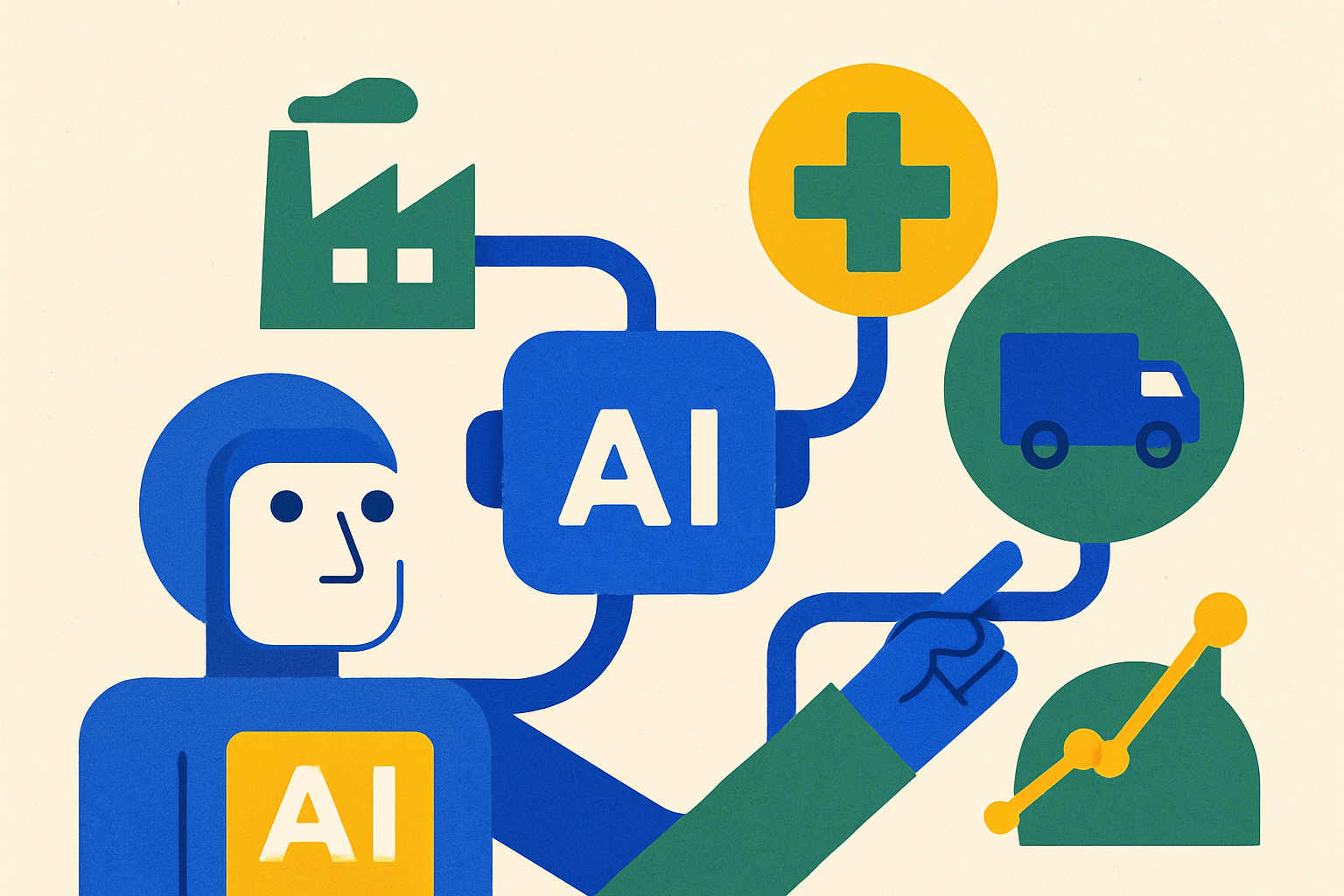
Look across every example here and the architecture repeats. The agent never works alone. It queries EHRs, ERP systems, CRMs, supplier APIs, fulfillment platforms, code repositories: live enterprise data at every step, not a snapshot pulled once and forgotten.
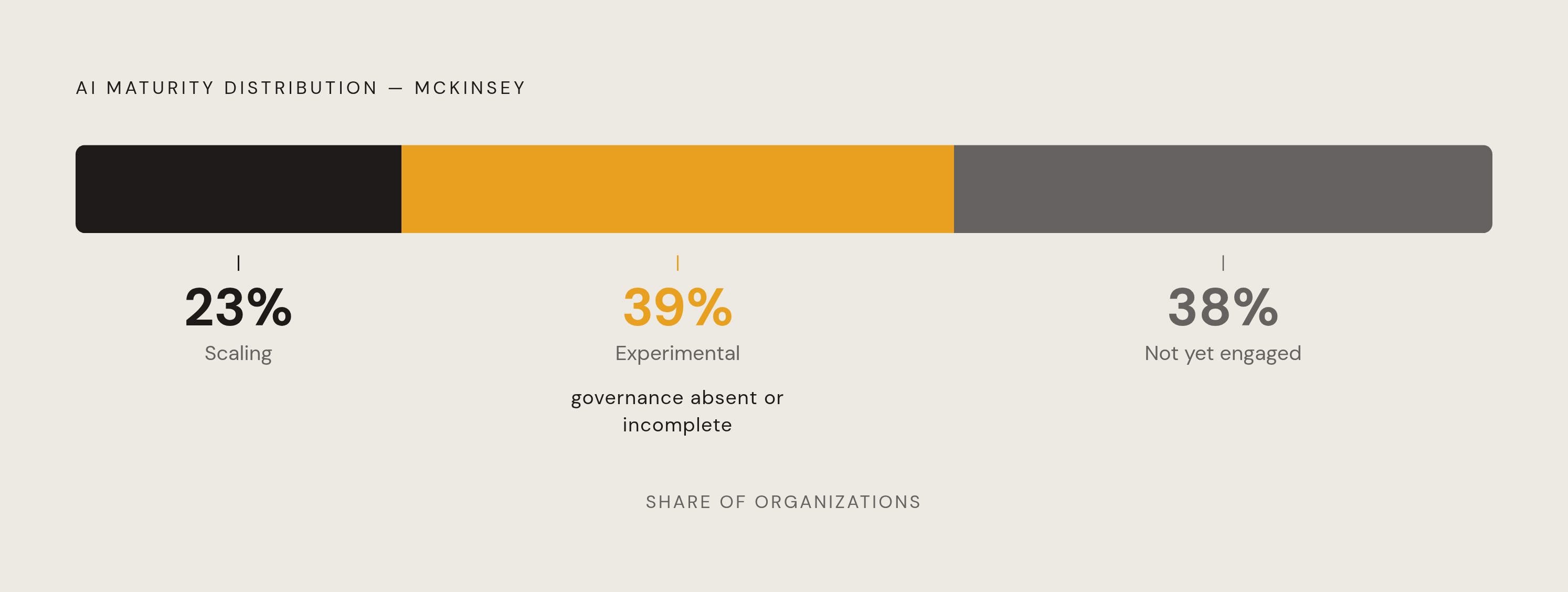
McKinsey found 23% of organizations actively scaling agentic AI, with another 39% still in experimental phases. That second group is exactly where access policies tend to be loose or missing entirely, because nobody's had to write them down yet. Scale comes first, governance comes later, if it comes at all before something breaks.
So here's the position worth stating plainly: autonomous multi-step execution, the entire point of agentic AI, cannot be separated from the systems it's allowed to reach. Governing what an agent can access is the precondition for running it in production without something going wrong at 2 a.m. when nobody's watching. Companies that deploy agents without defining access boundaries at the system level are stacking up exposure that eventually surfaces as an incident, not as a line item in a quarterly review, and by then there's no configuring your way out of it.
That kind of visibility — a control plane that lets organizations define what an AI agent can access, enforce those limits at runtime, and watch what's happening as it happens — is what turns a scattered set of agent pilots into something that actually runs in production without someone holding their breath.
The enterprises that scale agentic AI across healthcare, finance, manufacturing, and everywhere else in this piece will be the ones that built access control into the architecture from day one, ahead of the incidents that force everyone else to patch it in later.