Agentic AI vs Generative AI vs Predictive AI Compared
Understanding which AI type solves your actual problem.
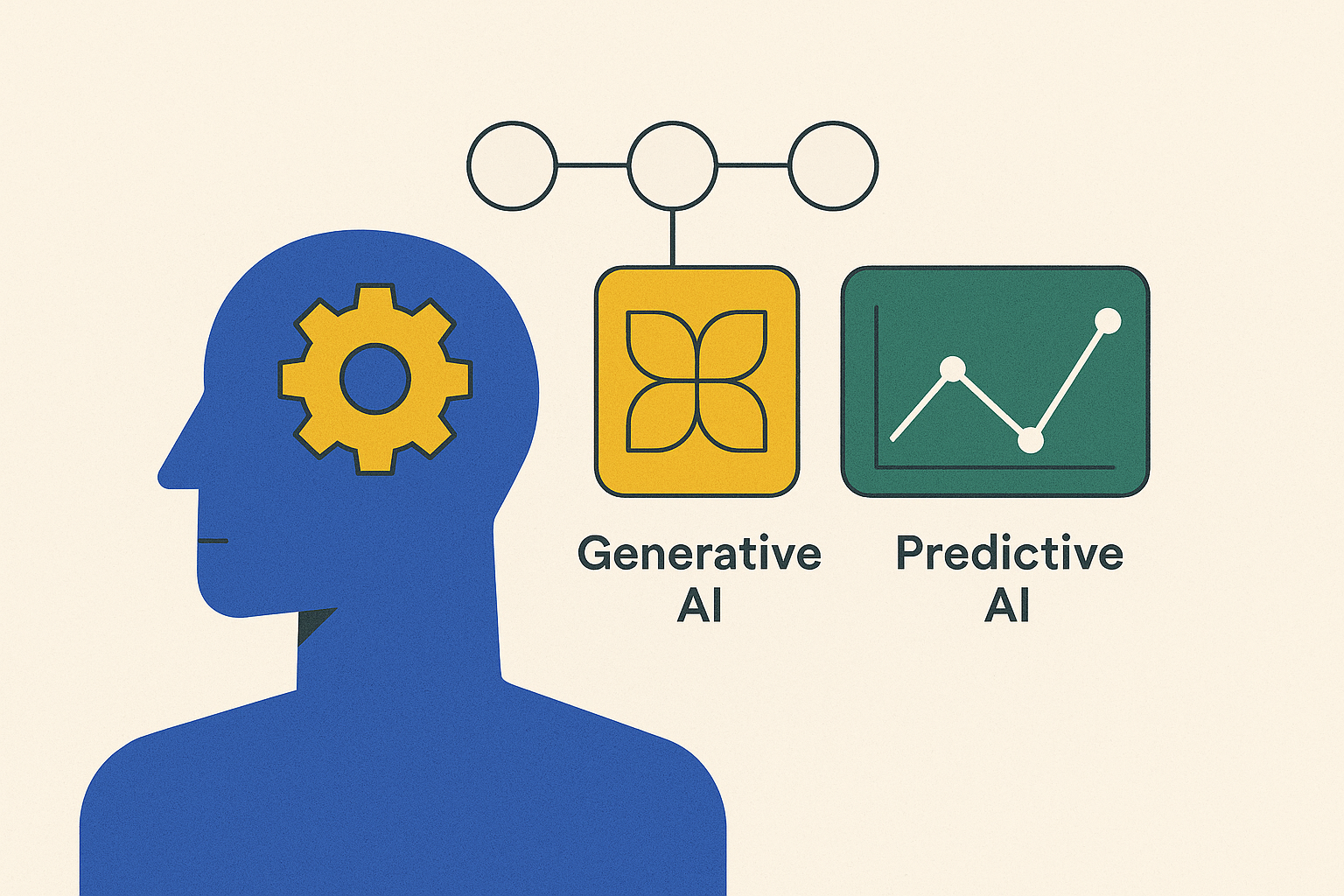
Predictive AI forecasts. Generative AI creates. Agentic AI acts. Those three verbs sound close enough that vendors blur them into one pitch, and boardrooms nod along without asking which one they actually need. That confusion has a real cost. Deploying the wrong type produces wasted budget, a tool nobody trusts, and a leadership team concluding "AI didn't work" when the actual problem was a mismatch between tool and task.
Part of the mess is structural. Plenty of modern platforms stack all three types into a single product. A customer support tool might predict what a customer wants, generate a reply, then fire off a follow-up action, all inside one interface. From the outside it looks like one thing called "AI." It looks like one thing called "AI," but it isn't. Three different systems are doing three different jobs: forecasting what will happen, producing what should be made, and executing what should be done. That last one, the doing, is where this piece is headed. It's the one that changes what a company has to build around the technology, not just what the technology can do.
What predictive AI does and where it earns its place
Predictive AI looks backward to make a guess about what's coming. It takes historical data, learns the relationship between inputs and outcomes, and returns a score or a probability. Not a paragraph, not an action. A number, or a label, with a confidence level attached.
The mechanics are standard at this point. A model trains on labeled data (past churn events, past fraud cases, past demand cycles) and learns which input patterns tend to precede which outcomes. Feed it new data and it scores the new case against what it learned. That's the whole trick, and it's genuinely useful when the outcome in question has happened before, many times, with structured data to show for it.
Demand forecasting, churn prediction, fraud detection, lead scoring, credit risk, predictive maintenance: these share a trait. The pattern has precedent. Financial services has leaned on this harder than any other sector, which tracks, since risk scoring at scale is basically what banking runs on.
Where predictive AI breaks down is just as clear. It can't write anything, can't initiate anything, and it struggles badly the moment a situation has no real precedent. Even where the math works, most organizations aren't set up to use it well. Surveys of marketing executives routinely find teams admitting their "predictions" are closer to guesswork than genuine data science, with overwhelmed data science teams cited as the top barrier to adoption. The technology usually isn't the bottleneck. Readiness is.
Carry this forward: predictive AI tells you what might happen. It leaves the email unwritten, the proposal undrafted, the report unfiled. That's a different job, for a different kind of system.
What generative AI does and where the hype met reality
Generative AI makes things. Text, images, code, audio, summaries, pulled from patterns learned during training. The interaction is simple on the surface: prompt it, and it responds.
Underneath, large language models predict the next token based on statistical patterns absorbed from enormous amounts of text. Diffusion models, the kind behind most popular image generators, work differently. They learn to reverse a noise-adding process, essentially sculpting an image out of static. Both families trace back to the transformer architecture, first documented in a 2017 paper by Ashish Vaswani and his co-authors. Everything since has been refinement on that foundation.
Adoption moved fast, and the market concentrated hard at the top. A handful of players, OpenAI, Microsoft, Google, AWS, and NVIDIA, control most of the generative AI space between them. But where the money is going tells a more interesting story than usage numbers do. Enterprise spending has shifted away from generic content generation and toward automated software development, synthetic data generation, and specialized decision support in healthcare. Away from novelty, and toward operations with a measurable return.
That shift makes sense given how 2025 actually played out. Gartner placed generative AI in its trough of disillusionment and projected that at least 30% of GenAI projects would get abandoned after the proof-of-concept stage. Industry analysis from 2025 found that the vast majority of organizations saw no meaningful impact on enterprise-wide earnings from their generative AI investments. None of that means the technology failed. It means expectations ran ahead of what a content generator, by itself, was ever built to deliver.
Generative AI hits a ceiling the moment it hands you the output. It doesn't take the next step, doesn't own the workflow, doesn't act on what it just wrote. Having produced the draft, it waits, doing nothing further until someone tells it what to do next. Generative AI is the most capable content-production layer built to date, and it still needs someone, or something, to point it at the next task.
What agentic AI does that the other two cannot
An agentic system perceives its environment, breaks a goal into smaller tasks, reasons through the options, calls on tools, takes action, checks the result, and keeps going, all without a human prompting each individual step. That's the whole distinction in one sentence, and it's a bigger one than it sounds.
"Autonomous" here means the system is built to pursue an outcome as its goal. It can browse, write, call APIs, execute code, produce files, and trigger the next workflow in the chain, all in sequence, without waiting for a person to greenlight each move.
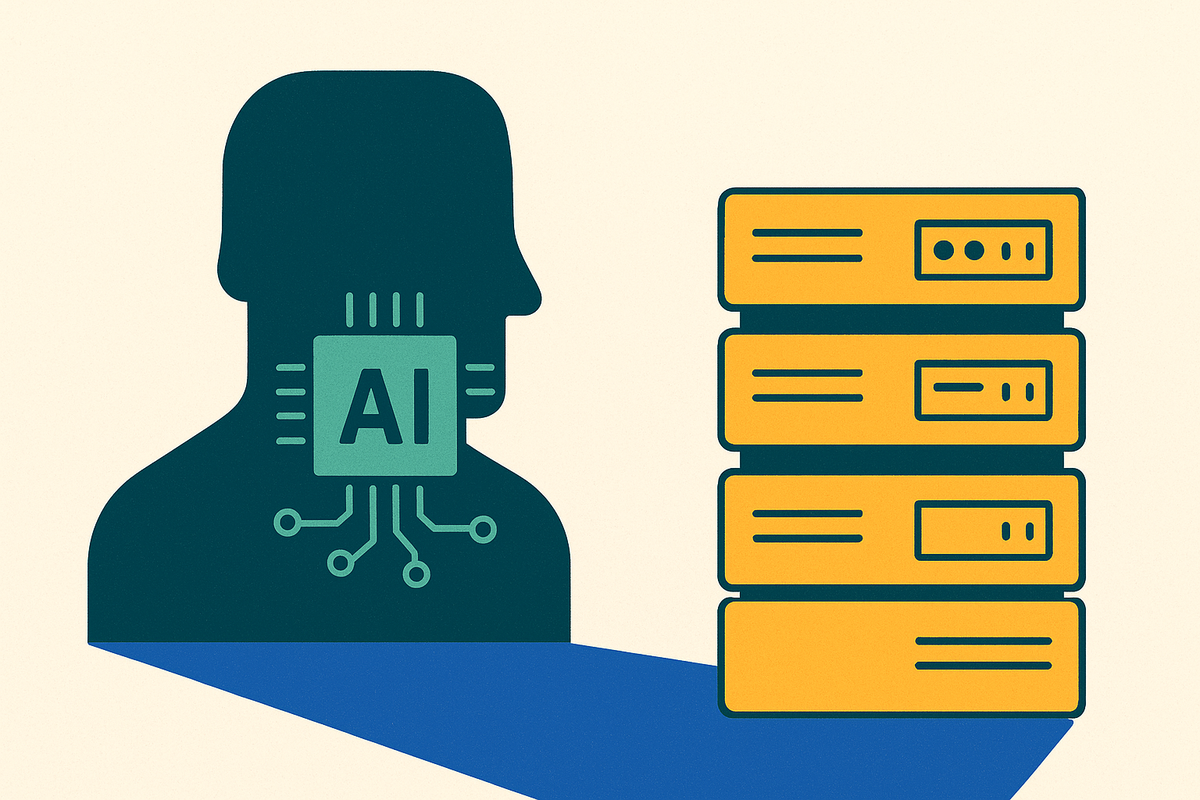
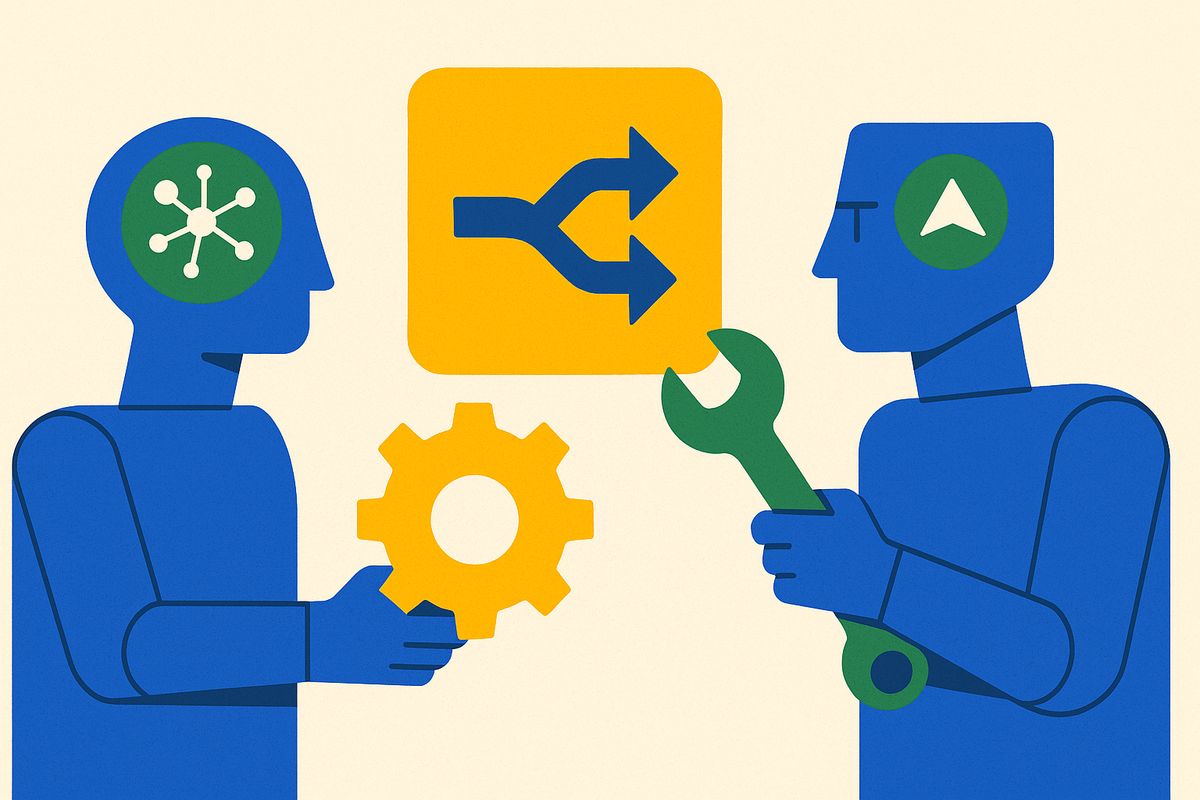
Agentic systems don't replace the other two types so much as absorb them as tools. Generative capability becomes one thing an agent can use. Predictive scores become an input an agent weighs. What agentic AI adds on top is autonomous decision-making, memory that persists across steps, and the initiative to act without being asked again.
The idea itself isn't new. Intelligent agents as a concept go back to AI research in the 1950s and 60s. What changed is that agentic AI became a production-ready enterprise capability somewhere between 2023 and 2025. Platforms like Amazon Bedrock Agents and Anthropic's Model Context Protocol turned the concept into something companies could actually deploy at scale.
JPMorgan offers one of the sharper concrete examples available. Its AI agents generate investment banking presentations in 30 seconds, work that used to take a junior analyst hours. The bank reportedly runs hundreds of active AI agent use cases in production, spanning M&A memo drafting, trade settlement automation, and real-time fraud detection. Elsewhere in finance, agentic systems are being applied across a range of multi-step operational tasks that need a sequence of connected decisions.
The variable that matters most here is autonomy level. Predictive and generative AI are low to medium autonomy: they produce something, and a person decides what happens next. Agentic AI operates at high autonomy, within guardrails. That last phrase is doing a lot of work, and the next section explains why.
Where agentic AI stands in enterprise adoption right now
Interest is high. Production maturity is not. Those two facts sit side by side right now, and the gap between them is the story.
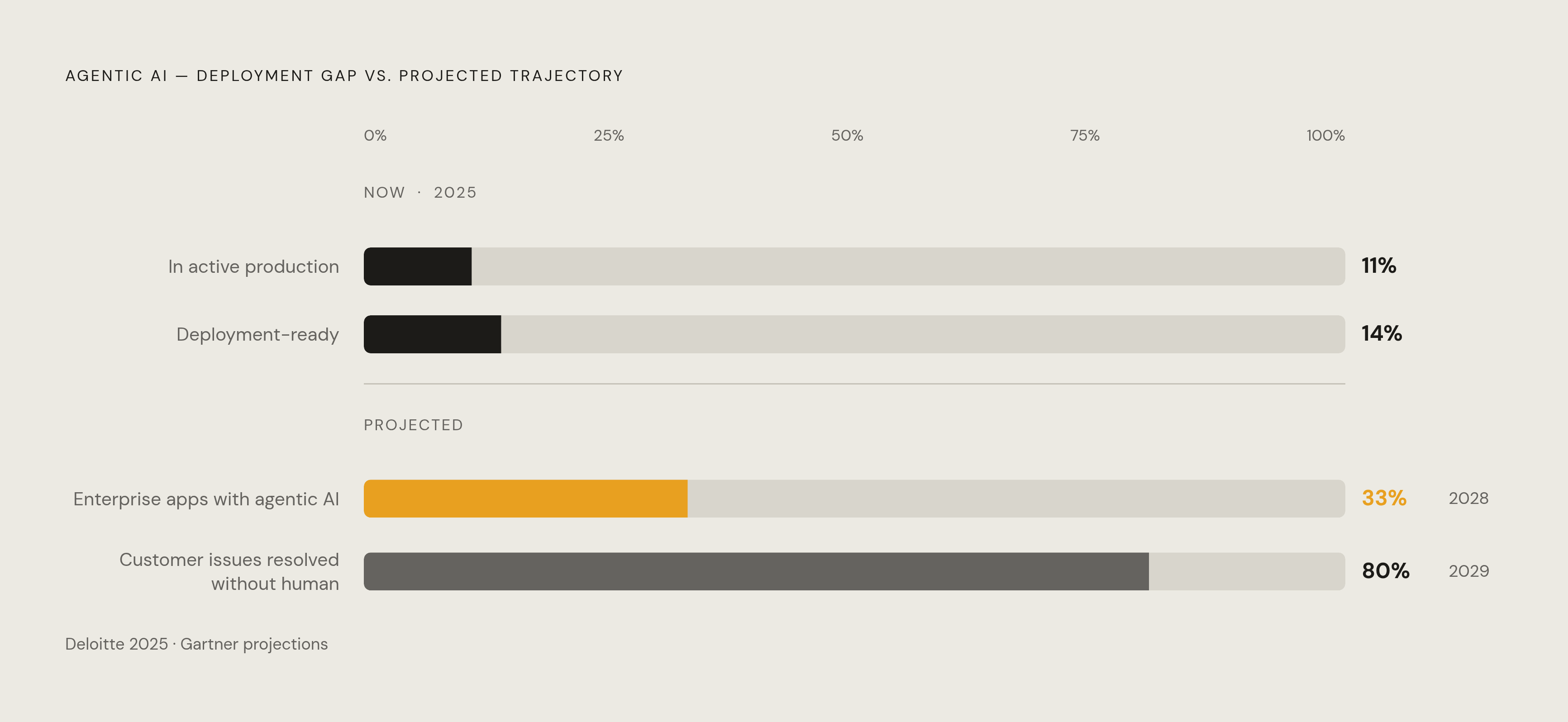
Enterprise appetite for agentic AI is enormous on paper, with most large organizations reporting some form of adoption already underway or planned within two years. Yet only a small fraction have actually deployed at scale, and most surveyed enterprises describe themselves as still stuck in exploration mode. Deloitte's 2025 Emerging Technology Trends study sharpens the picture: only about 14% of organizations have solutions that are actually deployment-ready, and just 11% run agentic systems in active production.
That gap isn't a capability problem, and calling it what it is matters. The tools work. What's missing is organizational scaffolding, including the governance, the access controls, and the monitoring needed to let an autonomous system operate safely at scale.
The trajectory still points sharply upward. Gartner projects that 33% of enterprise software applications will include agentic AI by 2028, up from less than 1% in 2024. A separate Gartner projection puts 40% of enterprise applications embedding task-specific AI agents by the end of 2026, up from under 5% in 2025. On customer service specifically, Gartner projects agentic AI resolving 80% of user issues without human involvement by 2029, potentially cutting support costs by 30%.
Read those numbers together and the picture is plain: most organizations are building toward a near future where agentic systems sit everywhere in the stack. Very few have built the infrastructure today to govern what those systems do once they're turned loose.
Agentic AI's capacity to act and the governance demands it creates that the other two do not
Predictive AI produces a score, and a human decides what to do with it. The blast radius of a bad prediction is bounded by that review step. Generative AI produces content, and a human reads it before it goes anywhere. The blast radius of a hallucinated paragraph is bounded, too, by the same kind of check.
Agentic AI skips that check by design. It calls APIs, writes to databases, sends messages, and triggers workflows, and there's no automatic human review sitting between the decision and the consequence. That changes the entire calculation of risk. The question stops being "did the AI produce the right output?" and becomes "what did the AI touch, and does anyone actually know?"
Three governance requirements follow directly from that shift, and none apply with the same urgency to predictive or generative systems.
Access control comes first: which systems and data sources can a given agent reach, and under what conditions. This is role-based access control, the same concept security teams have used for years, applied now to an AI identity instead of a human one.
Real-time observability is the second piece, and it isn't optional if the goal is catching problems instead of explaining them afterward. Knowing what an agent accessed as it happened beats reconstructing the story from logs once something has already gone wrong. An audit log read after an incident is a postmortem, not a safety net.
Identity and registry closes the loop. Every MCP server or tool connection an agent can reach is effectively an identity inside the system. An unregistered identity is an ungoverned one, and an ungoverned identity is exactly the one that eventually gets exploited.
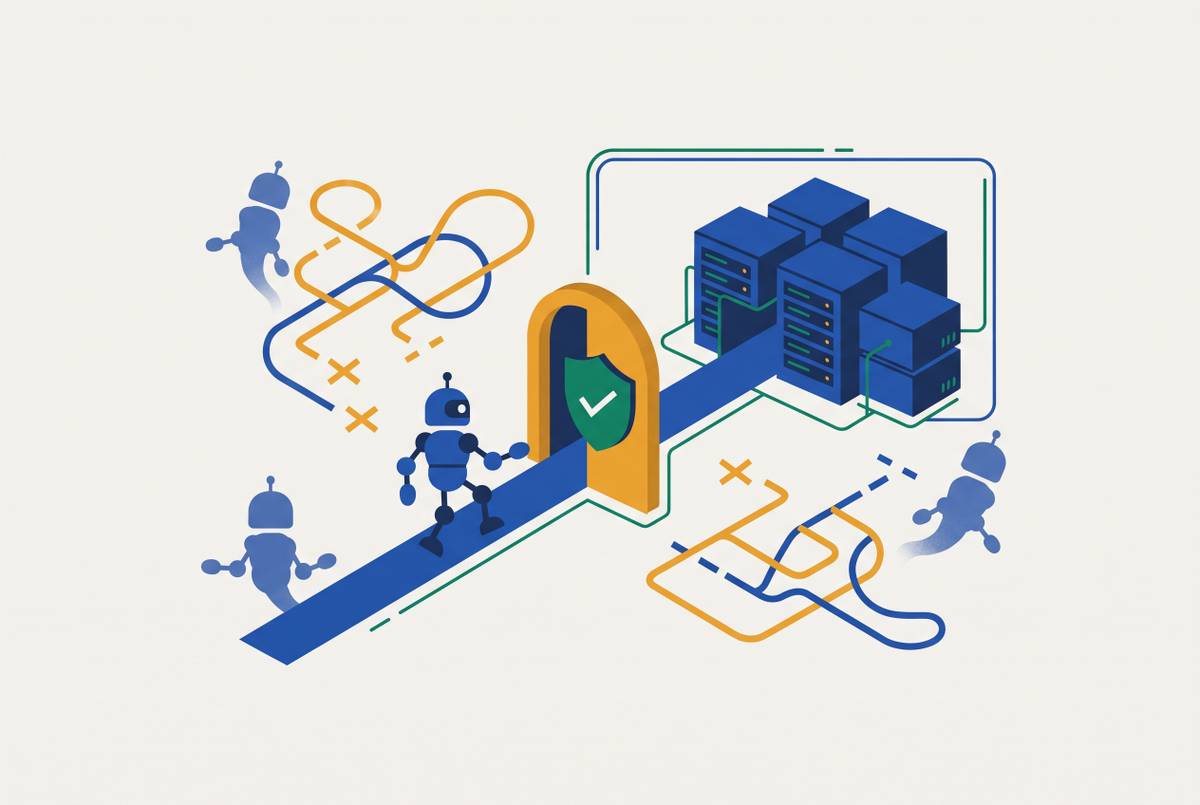
The Model Context Protocol has become the emerging standard for how agents connect to tools and data sources, which makes governing those connections a front-line security and compliance issue from day one of deployment. Blocking agentic AI outright doesn't stop adoption, it just pushes it underground. Teams get their outcomes one way or another, sanctioned or not. A governed path reduces that shadow activity far more effectively than a ban ever does, and the companies treating agentic governance as a real capability, not a compliance checkbox, are the ones saying yes to production faster. The guardrails are what make the speed possible in the first place.
Matching the right AI type to what the business actually needs to solve
Nobody should be asking "which AI is best." Once the job is framed correctly, the right question becomes which type fits it, and the answer follows from that.
Reach for predictive AI when the outcome has happened before and structured historical data backs it up. Forecasting, scoring, and risk ranking at scale are its home turf, especially where interpretability and consistency matter more to stakeholders than polished prose. Churn prediction, demand forecasting, fraud scoring, lead ranking, and credit risk all fit that mold.
Reach for generative AI when the job is producing flexible, human-readable content or code, and the output is meant to be a draft, a summary, a translation, something a person reviews before it goes anywhere or does anything. Marketing copy, document summarization, code assistance, and customer communication drafts belong here. Getting a draft out fast is the goal; autonomous follow-through isn't required.
Reach for agentic AI when the task is a sequence of connected decisions and actions rather than a single deliverable, when waiting on human approval at every step would kill the workflow's usefulness, and when the job spans multiple tools or data sources at once. End-to-end campaign execution, multi-step research and reporting, workflow automation, and operational monitoring that needs a live response all belong in this category.
Most mature deployments don't pick one lane. They combine all three: predictive models feed the agent's decisions, generative capability produces whatever content the agent needs along the way, and the agentic layer orchestrates the whole sequence and executes it. The composite does more than any single type could manage alone, and treating them as competitors instead of a stack is the mistake most boardrooms are still making.
What actually enables the jump from generative pilot projects into agentic production is the governance layer, which includes access controls, a server registry, and real-time visibility into what agents are doing while they do it. Some tools build that control layer directly, giving enterprises a gateway and observability system that lets agents get the access they need while the organization keeps full accountability for what those agents touch. Companies building that infrastructure now are the ones turning agentic experimentation into real production, while everyone else is still asking permission at every step.
A few mistakes occur repeatedly across these deployments. Expecting generative AI to forecast anything is a category error, since it creates, it doesn't anticipate from structured data. Using predictive AI for open-ended content tasks fails for the mirror-image reason: it produces scores, not prose. Deploying agentic AI without a governance layer and then treating the resulting incident as some kind of surprise misses the point. The vulnerability existed the moment that server went ungoverned, not the moment it got exploited. Treating the three types as a straight line, where agentic simply replaces what came before it, misreads the whole relationship. They're complementary tools solving different problems, and the companies that get this right are the ones staffing all three instead of betting the whole budget on one.